With the rise of christian nationalism, and the plundering of Christian symbolism to justify a fascist authoritarian political movement, I have a desire to address the question, “Who is my neighbour?”
The parable of the good Samaritan was Christ’s answer to the question ‘who is my neighbour’, and is part of a bigger question about eternal life and the relationship between mortals and God. The imagery Jesus used is that of robbers, priests, Levites and Samaritans – strange language to many people today. Sometimes Christians try to re-frame parables in contemporary language, to see if we can relate to the teaching more easily… so I offer you the parable of the good taxi driver:
A cyclist’s story
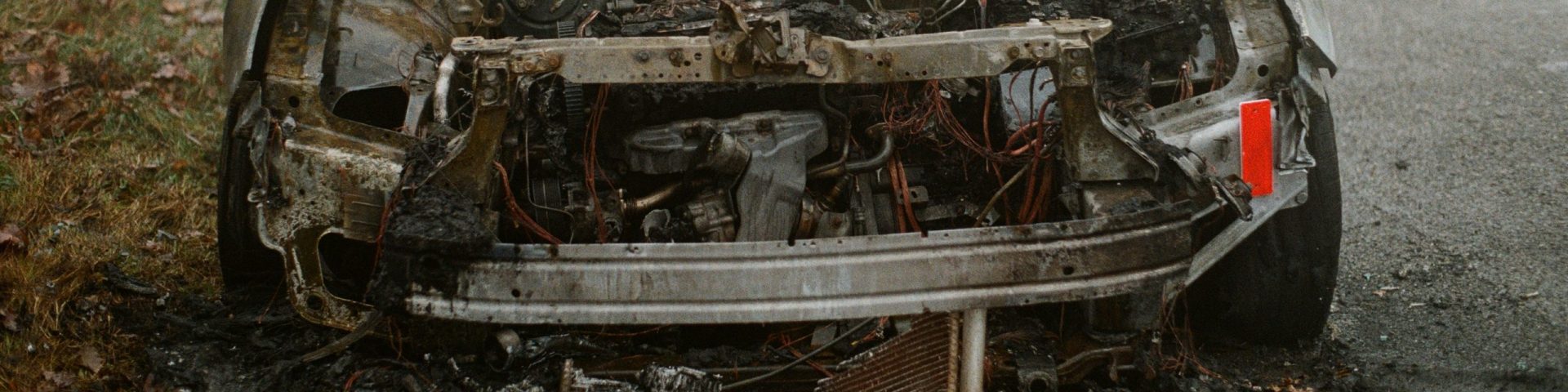
A young man was knocked off his bicycle by an autonomous vehicle. His leg was broken, and there were cuts and scrapes down his arm. His hi-viz jacket was in tatters down one side, and his bicycle was bent; the front wheel crushed and the battery was in a puddle in the gutter. In addition, the pizza he was delivering was splattered on the road.
The passenger in the self-drive car captured everything on their mobile phone and was currently uploading the video to social media, while wondering what compensation he would be awarded by the vehicle’s manufacturer for the trauma of being in the car that knocked the cyclist off.
Traffic was backed up for miles, and cars slowly moved around the scene. A priest was caught in the traffic jam and was upset to see an injured man beside the road, but couldn’t stop because of the queue. The priest had been opposed the building of a cycle route here because most of their congregation drove to church and there were worries about where they would park – so they offered up a prayer for the injured man, and for all those stuck in traffic today.
A journalist stuck further back hadn’t seen what happened, but felt compelled to tell the true story of this traffic chaos: they formulated a headline about the rise of ‘e-Bike maniacs’, and how ‘this wouldn’t have happened if the cyclist had used the cycle path’, and rounded it out with a demand that the ‘road be widened to help traffic move quicker’.
In the middle of the queue, a taxi-driver stopped. He helped the young man into his car, and loaded the bicycle into the back. He picked up the bike-battery and glanced at the pizza on the road, noting the fast food company. He drove the young man to hospital, he didn’t have to pay any medical bills (as this is a British parable) but he did have to pay the car park fee. He drove to the fast food company and covered the rest of the young man’s shift, delivering pizza around the town. The following morning he took the e-bike to a local bike shop, offered to pay for the repairs, and bought the young man a new hi-viz jacket.
Social media stories began to circulate that the Muslim taxi-driver had knocked him off. Deepfake AI videos were shared and re-shared. There were riots outside the taxi firm, and eventually their business closed. The press called for an investigation. The injured young man was found to be an undocumented migrant working illegally in the gig-economy, and was eventually deported.
Who do you supposed was this young man’s neighbour?
Reflections on this parable
It is difficult for me to be shocked by the original parable of the good Samaritan, because throughout my life the phrase, ‘the good Samaritan’ has been in our shared cultural background. The Samaritans are a charity that prevents suicide through the power of human connection: connecting people in crisis with trained volunteers who will always listen. Subconsciously, I wouldn’t be surprised if all Samaritans are good. By re-framing the parable with contemporary language it gives me an opportunity to think about this differently.
Re-reading the parable and asking myself who I identify with is useful because I’m interested in the question, who is my neighbour – it is easier to think about this if I can see myself somewhere in this story. By making the victim a cyclist, I easily feel a connection with them. I can picture myself beside the road; cut up, and with a broken bike. I imagine myself as the vulnerable, weak, powerless victim at the centre of the parable – so now I’m deeply invested in the question, who is my neighbour?
Bloody cyclists
Whenever a cyclist is knocked off, there are a range of reactions in public and private – and there is often a tendency to blame people rather than unsafe systems. In this story it is difficult to blame any particular motorist stereotype because an autonomous driving vehicle was the culprit. Choosing to make an autonomous car the villain highlights the way unsafe systems can leave us feeling trapped while suffering unfolds around us – even if we’re not directly hurt.
I know that in my retelling, I’ve created caricatures. In this story I could have chosen anyone to be the good neighbour. Not all of my fellow clergy are motorists who want bigger car parks. Not all journalists bring their own agenda to every story. Not all taxi drivers are the paragon of virtue I’ve imagined here. I could have imagined this story differently… but the key insight is the way I identify with the victim and exactly how ‘my neighbour’ helps. There are always people who metaphorically pass by on the other side, but when I’m hurt and powerless… look at the help I wanted the cyclist to receive. My fictitious taxi-driver went above and beyond: loving me, as I love myself.
Once I emotionally understand this parable from the perspective of the victim, it changes the way I approach my own ‘good neighbourly’ behaviour.
Stereotypes
Any of these characters could have been the ‘good neighbour’. One of the keys to Christ’s parable is that the victim is vulnerable, weak and powerless. I have previously failed to understand this parable because I’ve focused on the ‘good Samaritan’ as though it was the Samaritan-ness that led him to be good. The case is that Jesus used an outsider to show that literally anyone could be a good neighbour. In the retelling, I chose a Muslim taxi driver not because I feel Muslim taxi drivers are holier than me – but because in a culture of christian nationalism, non-white British people are caricatured as those we should fear. I took the opportunity to echo the original parable as a deliberate challenge to that stereotype.
Being a good neighbour
Once the parable is re-framed so that the listener is invited to empathise with the victim, it changes the way we see other victims. Our society today is filled with people who are vulnerable, weak and powerless… and in their unique powerlessness they become grouped, labelled, judged and cast out. Those with power but without empathy, set one group of vulnerable people against another – lacking any understanding of what it genuinely means to be a victim. It becomes overwhelming for me to consider being a good neighbour to everyone that the systems of society have left beaten up beside the road. What humanity really needs, is more good neighbours – and therefore what we need is for more people to embrace their own vulnerability.
The bigger picture
Circling back to why Jesus told this parable, I remember that it was part of a bigger picture of eternal life and the relationship between mortals and God. Loving our neighbour was only part of the the answer. Loving God was the other part. In my role as priest, I’m sometimes asked, ‘How can we love the God who lets this violence continue? Does God not care about the suffering of humanity?’. I point to Jesus: wrongly accused, tortured, crucified… and suggest to those who ask, that Jesus may know the answer to their questions.