This week I had the pleasure of two ‘rural ministry’ conversations, both with experienced priests within the Church of England, and both of whom talked about the importance of ecumenical relationships.
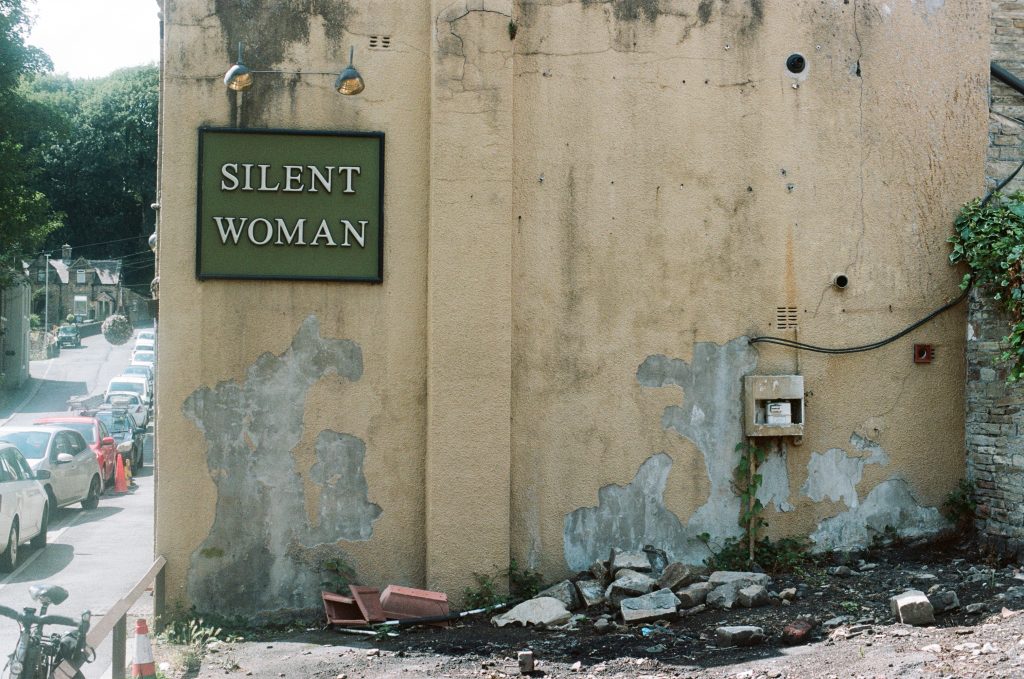
It wasn’t always like this. In “Colne Valley: A history of a Pennine landscape”, the author Rob Vincent records the fractured relationship between non-conformists and establishment churches that can be seen in the buildings of the South Pennine landscape. I particularly enjoyed the tale of the curate of St James (Slaithwaite) who fell out with a local family over the ownership of eggs laid on neighbouring land. The local family not only left the church, but invited a baptist minister to begin a new worshipping community in the upstairs room of the Silent Woman – literally next door to the church. ‘The Silent’ was also a pub I enjoyed drinking in, until it to finally closed in 2025.
I’ve never had an issue with ecumenical partnerships, perhaps because I was Confirmed at a joint church service in Swindon: a service held by the Methodists, the United Reformed Church and the Church of England. I’ve also never had a problem with going to the pub – either for church services or for the more traditional reason of drinking beer.
In my conversations this week, I heard of mission and ministry based around community, and responding with love to human need. One priest recognised that suicide rates among men in rural communities is higher than the national average, and that a ministry that provided space for men to talk was deeply important. The same priest talked about the importance of healing ministry and the way that healing is not the same as miraculously ‘getting better’. This priest’s church had partnered with other local churches to host healing services and to provide training for congregations so that ‘healing’ was not some clumsy attempt to manipulate people, but a genuine response to help people who were suffering.
Another priest I spent time with, spoke about the importance of context. This second priest told me that it can be encouraging to hear other ministers speak about positive mission activities if we don’t try to replicate these activities without appropriate context. Each rural minister has to be in tune with the very specific and local context they find themselves in, and often mindful of the way context varies from one parish to the next – important when a priest is in charge of multiple parishes across a wide geographical area. This priest encouraged me to read “How Village Churches Thrive”, and to champion the simple missional activities that people are doing. We also noted that people with an active role to play in our communities are often active in multiple community groups; from the Church PCC, to the local school, to the Women’s Institute or the Young Farmers Club. Pastoral care rated highly for this priest, including the ministry of visiting people in their homes. We know this is something that can be shared with the congregation, but there still persists the impression that ‘unless the Vicar visits, no one from church has been’. We talked briefly about whether this perception of a visit by the Vicar will ever change.
This second priest also talked more broadly of the poor perception of rural ministry by the wider Church of England. Rural priests can be mischaracterized as the spiritual equivalent of rural veterinarians: visiting farmers, having too much to eat, and wobbling around the countryside from sherry to sherry. When we are spoken of in synodical meetings, rural is sometimes grouped with estates ministry – as though one group of hard to reach people is identical to another. This priest said we need a language of rural mission that will help us to communicate the diversity of context and the range of missional responses to the needs that exist.
As my time with other priests drew to a close, I picked up that the Arthur Rank Centre runs a training course on rural mission and ministry, and are also hosting a “Love Rural” conference. Additionally, Churches Together in England has launched a “Missioner’s Guild” to assist with ministry-networking in rural locations.
Back in my own Benefice of Upper Weardale, on the run up to Mothering Sunday, I witnessed first hand the intertwined relationships between rural business, church, and wider community: the Landlady of the Cross Keys was preparing bowls of flowering bulbs to be handed out in church, even though she herself would be running her pub on a busy ‘Mother’s Day’ in a touristy location. Church and pub in harmony – maybe one day we’ll be in the same building, just like the baptist minister in Slaithwaite. Afterall, buildings don’t last forever, and church is people.