I wrote a theologically reflective blog post about my first 6 to 8 months in Upper Weardale, and in my role as Rural Mission Lead. Since then I have been to visit a few more clergy, written to a few Deanery Lay Chairs, and attended the Bishop of Durham’s Clergy study day. I have also been struck by the missional progress we’re making here in the Upper Weardale Benefice. This blog post is a moment to document a few things.
Caveat: this blog is thought-dump which is intended to help me articulate my experiences in the future… dear reader please read the following in that light.
Visiting clergy and lay leaders in rural contexts: The theme of loneliness continues. This isn’t surprising, however in addition to the reasons people give for loneliness such as the isolation of rural ministry, there have been a couple more insights:
- One is that serving clergy and lay leaders are now seeing clergy retire and not be replaced, the national message of dwindling numbers of priests in parish roles is giving churches the impression that vacancies may never be filled. This is leading to a pernicious sense of hopelessness. Given that hope in the living God is a foundation of the church, and that God is at work in the world and the church – it is counter-intuitive to think that the church is becoming hopeless. Hope and hopelessness… these themes are intertwined in the psalms, and maybe we can find God’s reassurance there. Maybe a rural study of the psalms would be helpful – something to add to my conversations around discipleship in rural contexts.
- Another insight is that there seem to be faithful lay leaders stepping into worship leading roles. Many of them are Churchwardens, but some of them are ex-Churchwardens. I have tried to encourage people to take a short Diocesan training course on leading worship so they can have the Bishop’s delegated authority to continue when they stop being Churchwardens.
- Isolated by stories of success… this is a weird one, but I’m also getting a sense that some parishes feel isolated because they read e-news letters with success stories from vibrant town and city churches. The e-news often includes a brightly colourful picture of smiling young adults and children. It is hard to deal with this, because it seems to be coupled with hopelessness in some communities. I think the rhetoric goes… “we are in decline, we don’t have a Vicar, we are old and don’t know what to do, why is this happening to us, why does no one come to church, look at those growing churches – they have a Vicar, we are alone here and nobody cares about us.” I am very much paraphrasing a conversation I had with an Churchwarden. How do I find a way to communicate that God’s glory has the best chance to shine where humanity’s ability is weakest? The message I want to share is writ large throughout the Bible and the story of God’s people… how is it that faithful churchgoers haven’t heard it or don’t believe it. Some work to do here.
- The last observation is that prayer isn’t as high on the agenda as it could be. For example, one older Churchwarden said to me that their congregation is 8 people over 80 years old, and that they don’t have the energy to engage with Diocese missional activities. I am adamant that the church needs to be a church at prayer, trusting and having hope that God will be at work. I wonder, in light of some of the conversations I’ve had recently, whether churches are actually praying for people to come to know God. I have been trying to gently encourage older people within the church that prayer is the most effective way to help the church.
Reaching out to Deaneries: I have made appointments with a couple of Deanery Lay Chairs to attend their Deanery Synod meetings. The first few I have booked are set for May 2027.
Celebrating Rural Mission Conference: Another nice bit of news is that I have been given funding for a 2027 conference celebrating rural mission and both Bishop Rick and Archdeacon Stephen have agreed to come along.
Upper Weardale Update: The “Oh God, it’s the Vicar” videos I had funding to make are sowing seeds in our community. I’m using the phrase “Creating Curiosity in Christianity”, and over the last couple of weeks I’ve had a few people come to church asking the question, “How can I find out more about Christianity?” I’m very encouraged by this. In response I have been doing face-to-face conversations, but our next step is to invest in the “Start!” seekers course, mainly because this is a 6 week course that we can run in church and that doesn’t require the Vicar’s expertise to run. I will be training up a group of people to run this… firstly leading by example. The fact that phase one of our church re-ordering is complete, and that St Thomas in Stanhope now has a wide and uncluttered space to host events and meetings is really helpful. Running a seekers course is a co-led project with my LLM-in-training.
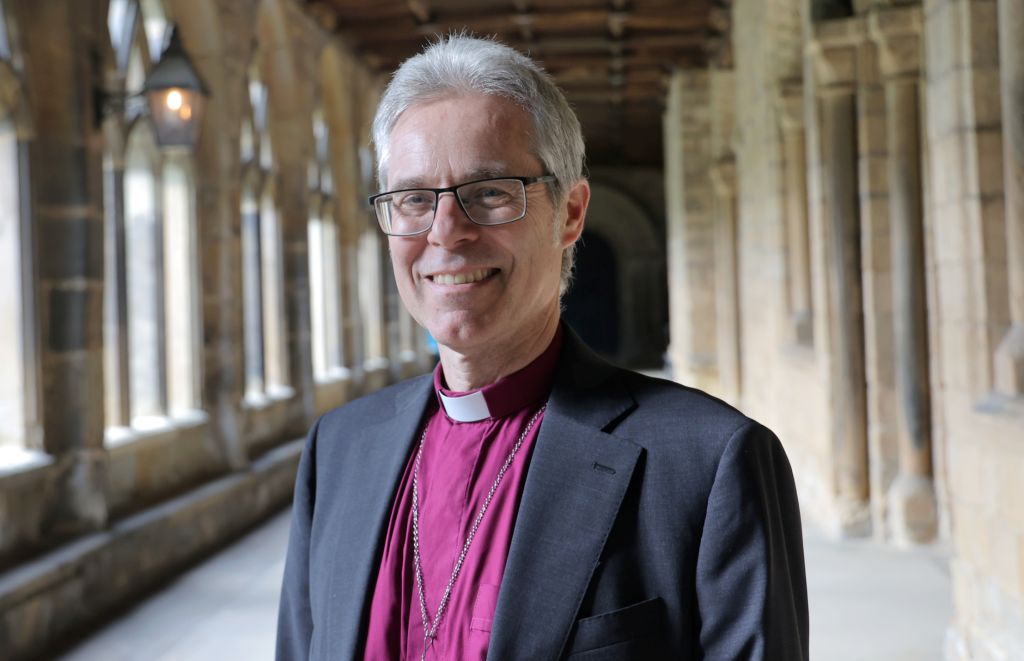
Bishop Rick’s Clergy study day: We had an encouraging day in Durham as the clergy from the Diocese gathered together to celebrate a Eucharist together, and to pray together. We heard from Bishop Rick about his hopes and plans for the Diocese… and I was especially encouraged that we will be praying for a renewal of the church led by the Holy Spirit. I’m excited that Bishop Rick wasn’t telling us what to do in a practical sense, but is charging us to spend a year in prayer. He gave us three versions of a Collect we could use in church, but also said we could pray in our own words. This is the one I’m using in our churches:
Almighty God, you are calling us as the churches of the Diocese of Durham to renewed life, hope and vision: take our worship and witness, that, by the work of your Spirit, many may come to faith in Christ and that we would become a church of missionary disciples. So, may you bless our congregation, and – through us – bless our parish, through the love and service of your living, growing church in this place; through Jesus Christ our Lord. Amen.