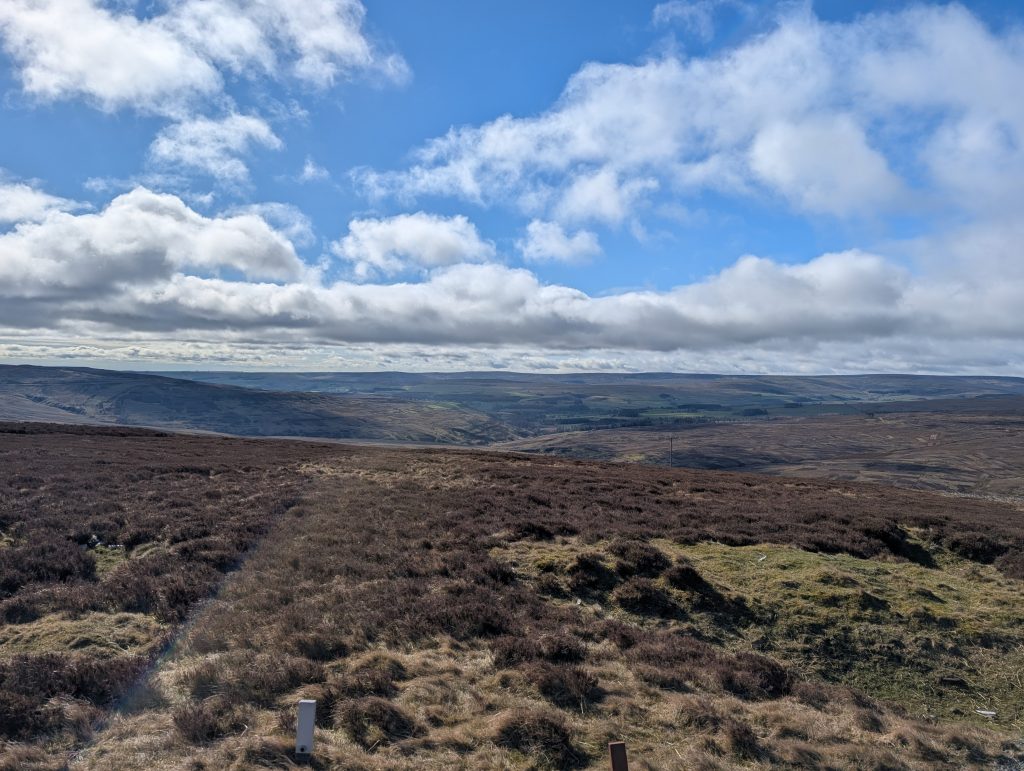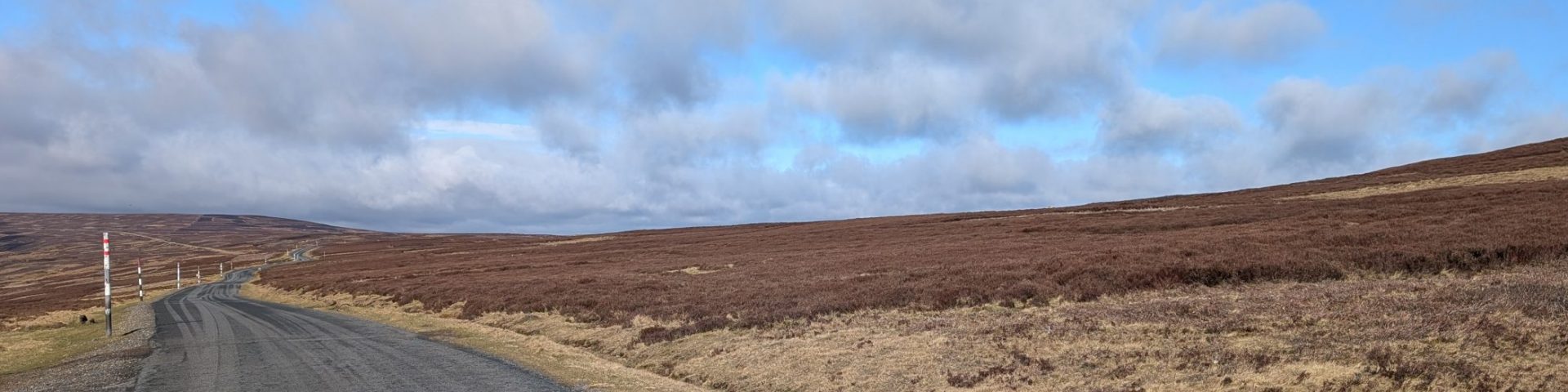
Wilderness has a special place in the story of God and God’s people. It seems to be a space where humanity’s relationship with God is changed. Some people are driven into the wilderness, and some are drawn out into the same wild locations. Jesus would go alone into the wilderness to pray. I wonder if we mortals of the twenty-first century are missing something that may be good for our souls.
Over the last decade, I have been thinking about the call to worship God with all our heart, soul, mind and strength. I began to ask whether we can express Christian worship through the non-academic language of our physical selves. What if our bodies could worship God in a language God wrote: the language of lactic acid and the digestion of cake. The wonderful thing about ‘all’ is that it is both subjective and relative – so worshipping with ‘all’ brings an equality to our relative relationships with God and therefore with each other.
In my post as Vicar of Marsden and Slaithwaite, I would sometimes cycle up to the top of Standedge and, in the wind and rain, I would shout my prayers at God. Praying where only God could hear. I would sometimes cycle around the Benefice, and pray for all the people that I held the ‘care of souls’ for. I learned this behaviour from many other clergy who have walked or cycled the bounds of their parishes – I have inherited this tradition of the church.
Now though, I’m considering an experimental type of worship… one in which “our worship” is a physical journey.
I have an idea for worship that begins wherever we want it to begin, but travels to a place where we can meet others who are moving towards God in the wild. One practical aspect would be to define a time and a place to meet, but leaving the freedom to begin the journey where we can. Once we meet, to have a brief period where of shared experiences, before heading back to the world. This is a simple idea.
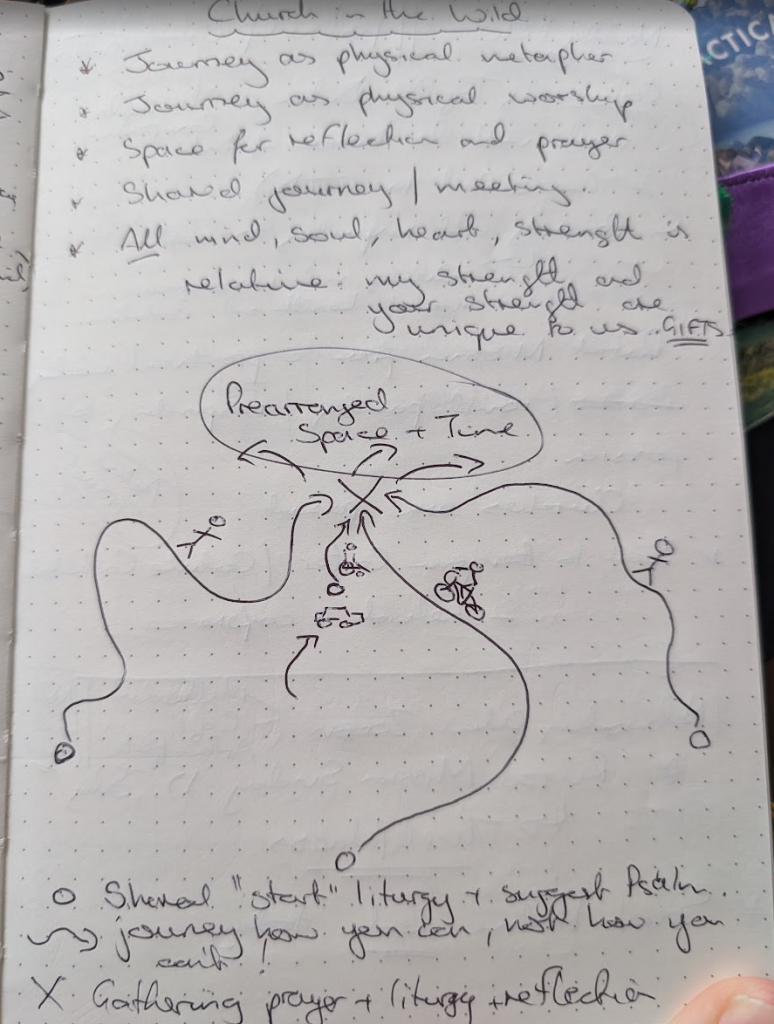
A simple idea can lead to an experience of something sacred.
I think I’m going to give this a go on holy Saturday. That day when the church remembers Christ’s descent to death. A day of emptiness and lament. A day where we consider life in the absence of God. One day in the year when we can pray, “my God, my God, why have you forsaken me”, a day of genuine wilderness for the soul.
- I shall begin with a Psalm – a psalm of lament. Reading and praying.
- Then I shall go for a bike ride to a remote wilderness place.
- When I arrive I shall stop and reflect on the Psalm and how God may have spoken to me through the combination of words and movement.
- I shall then eat some cake – because church (like cycling) goes well with cake.
- Then I shall come home.
This is a simple model of physical worship: worship with ‘all’ my strength. Worship in the wilderness. Church in the wild.