During Covid, while the Vicar of Marsden and Slaithwaite, I used as much technology as possible to make church resources available to the church and the wider community. I learned that I could make films with my mobile phone, but that sound quality was really important. At the time I bought myself a wired lavalier microphone, because my smartphone had a 3.5mm microphone socket. This improved the quality of recordings immensely, however there were limitations – the wire was 5m long and made recording videos a static activity. I had always wondered whether a wireless microphone would make recording easier.
The Diocese of Durham offers micro grants for missional activities, managed by Linda Ransom the Growing Churches Enabler. I reached out for a grant for a wireless microphone and was encouraged to apply for a larger grant to cover the whole vlogging exercise.
Taking time to plan the production and delivery of church videos I highlighted the following criteria:
- If I want to pass the equipment on to others in the parish – I can’t use my personal smartphone, I would need dedicated equipment. A vlogging camera would be required and a good quality microphone is essential.
- Turning the raw footage into shareable videos would require editing software – is there any free to use software out there?
- Hosting and streaming the video would be a burden on the church website. Are there video hosting and sharing websites that would be suitable for Christian material?
- Promotion: how would we raise awareness of these videos in the local community?
1. Vlogging equipment
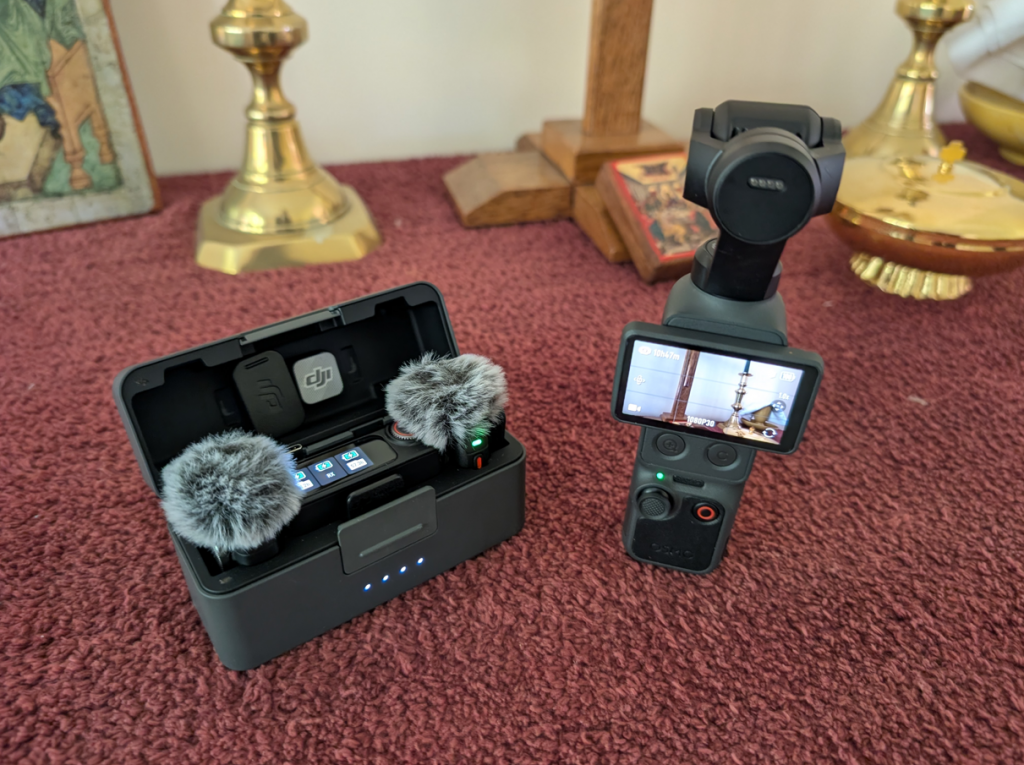
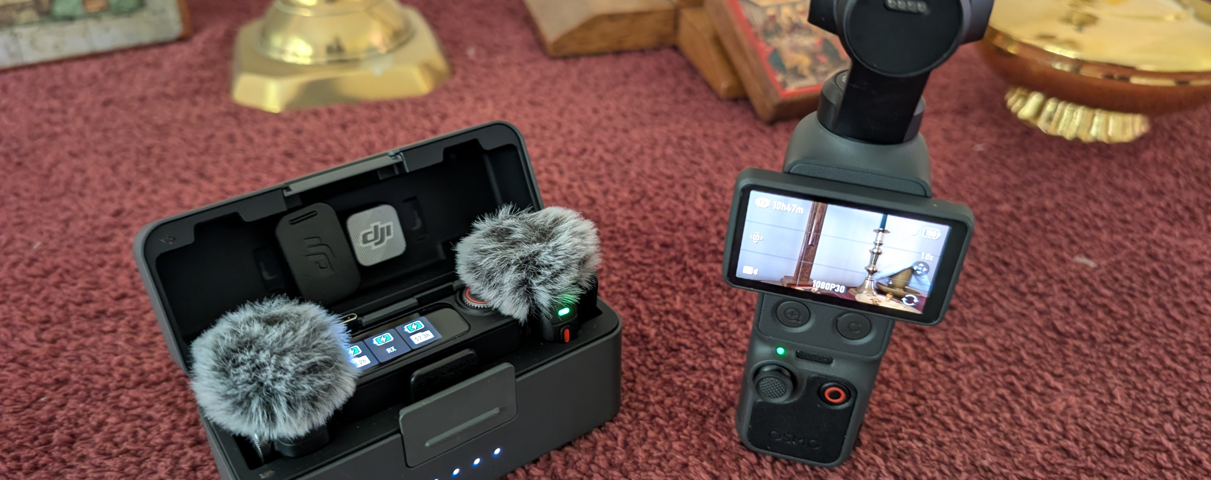
This is not a review of technology, neither is it a recommendation of one set of equipment over another. After a bit of personal research into the sort of equipment that would be suitable, flexible, and reliable, I settled on the combination of the DJI Osmo Pocket 4 camera, with the DJI Mic 3. This provides tools which integrate with each other, integrate with a smartphone or laptop, work in isolation and are of a quality far exceeding anything I actually needed – hopefully providing longevity for future users.
2. From footage to film
Making entire videos in a single ‘take’ is challenging. It is much easier to be able to stitch together ‘takes’ in the same way that filmmakers piece together movies. This also opens up potential to be more visually appealing and creative. On top of that, taking raw footage and making it suitable for streaming involves changing the compression and modifying the format to suit the platform. Most social media platforms will do this as we upload the raw footage, but if we prepare the films in advance it keeps us in control of the quality. I found after a little research, that Davinci Resolve is a toolkit freely available for amateur filmmakers to have access to all the wizardry of Hollywood.
3. Hosting videos
I have a personal ‘bee in my bonnet’ about advertisers making money off the back of the work of creative people. This is why my own website – FatherHilarious.blog – is entirely paid for by me and advert free. YouTube has a massive algorithmic reach, but embeds advertising videos into the artist’s work. Even for those of us who turn off personalised advertising, we find ourselves subjected to AI slop, cryptocurrency trading, and incessant gambling adverts. I don’t want the gospel to be buried under a this awful advertising stream. Thankfully Vimeo is an advert free platform because the artists and content creators pay to have their material hosted and streamed. I applied for the grant to cover the cost of three years of Vimeo suibscription.
4. Sharing in the age of algorithm
There is no single space for local or worldwide communication – no magic ‘comms’ bullet which brings your writing, videos, or artwork into the public domain. Instead we live in a mixed ecology of communication, and this is actually a great thing, because no one (not even the owners of platforms like facebook and X/twitter) has as much influence as they pretend to have. In most cases AI slop is made by bots, flooded onto their platforms, and subsequently scraped by AI bots looking for source material. In the end the internet has become an Ouroboros: Artificial intelligence eating itself.
So we can use all the communication channels open to us. Word of mouth, church website, facebook, YouTube, LinkedIn, the Weardale Gazette, Bluesky, email and personal recommendation – a plethora of communication techniques which are not dominated by any one owner, and which adds diversity to the algorithmic search results.
Microgrant for mission
The Diocese of Durham microgrants are awarded to church groups – such as PCCs – so when I applied for the mission/evangelism vlogging equipment, I first had to get the approval of the church council. With that I was able to apply to the Diocese and the grant was quickly approved. The equipment belongs to the church PCC, and I’m now using it to turn those enquirer’s course questions into short evangelism videos.
The video making results are here: Oh God! It’s the Vicar! Turning the failure of the enquirer’s course into a fresh opportunity.